

Reeded glass film and frosted film can both change the appearance of existing glazing, but they create different effects. Reeded film adds a fluted-glass look and distorts the view through the glass. Frosted film creates a more uniform translucent finish and is generally the better starting point when stronger visual privacy is the priority.
The right choice depends on what you want to see through the glass, how the space is used and the finish you prefer. Here is how we help Melbourne customers compare them.
Reeded film vs frosted film at a glance
| Consideration | Reeded film | Frosted film |
|---|---|---|
| Appearance | Clear reeded film: vertical fluted-glass effect | Even translucent finish, with different densities and designs available |
| View through glass | Clear reeded: distorted shapes and colours can remain visible | Denser finishes obscure detail more strongly |
| Privacy | Clear reeded: assess the sample carefully where silhouettes matter | Denser frost is generally a better starting point for stronger privacy, though silhouettes may still be visible |
| Natural light | Varies by the individual product and existing glazing | Varies by the individual product and existing glazing |
| Design options | Different reed widths, clear, frosted and some coloured options | Full coverage, bands, cut patterns and graphics |
| Typical applications | Decorative doors, reception glazing and partitions | Privacy glazing, meeting rooms and selected bathroom windows |
What is reeded glass film?
Reeded glass film is a decorative film applied to existing glass to create the appearance of fluted or reeded glazing. Its repeating pattern breaks up the view through the window and adds a more textured look without replacing the glass. Clear reeded film can still reveal outlines, movement and colours.
Reed widths and finish options
The standard reeded pattern we commonly use is approximately 13 mm wide per reed, although thinner and wider patterns are available. Changing the width changes the scale and appearance of the pattern. Clear is the usual choice, but we also see interest in frosted reeded finishes and some coloured options. Availability varies by product. Reeded and frosted are therefore not mutually exclusive categories: a film can combine a reeded pattern with a frosted finish.
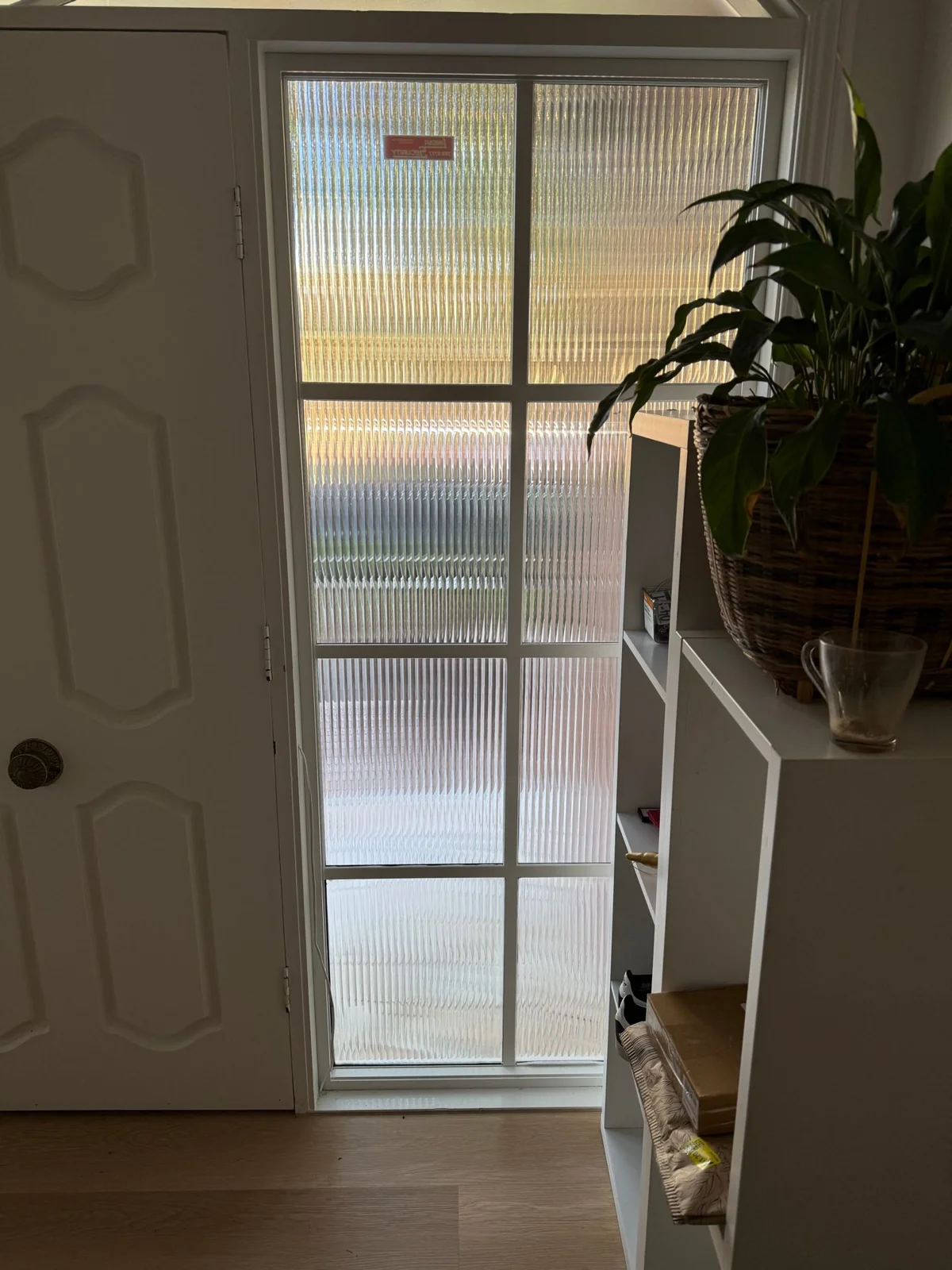
Reeded entrance glazing in Caulfield South
At a Caulfield South home, we installed reeded film to 16 panes around the front entrance. The photograph shows the vertical pattern across the smaller, divided panes beside the door. Outside colours and shapes remain visible but are distorted, illustrating how reeded film changes the view while adding a decorative finish.
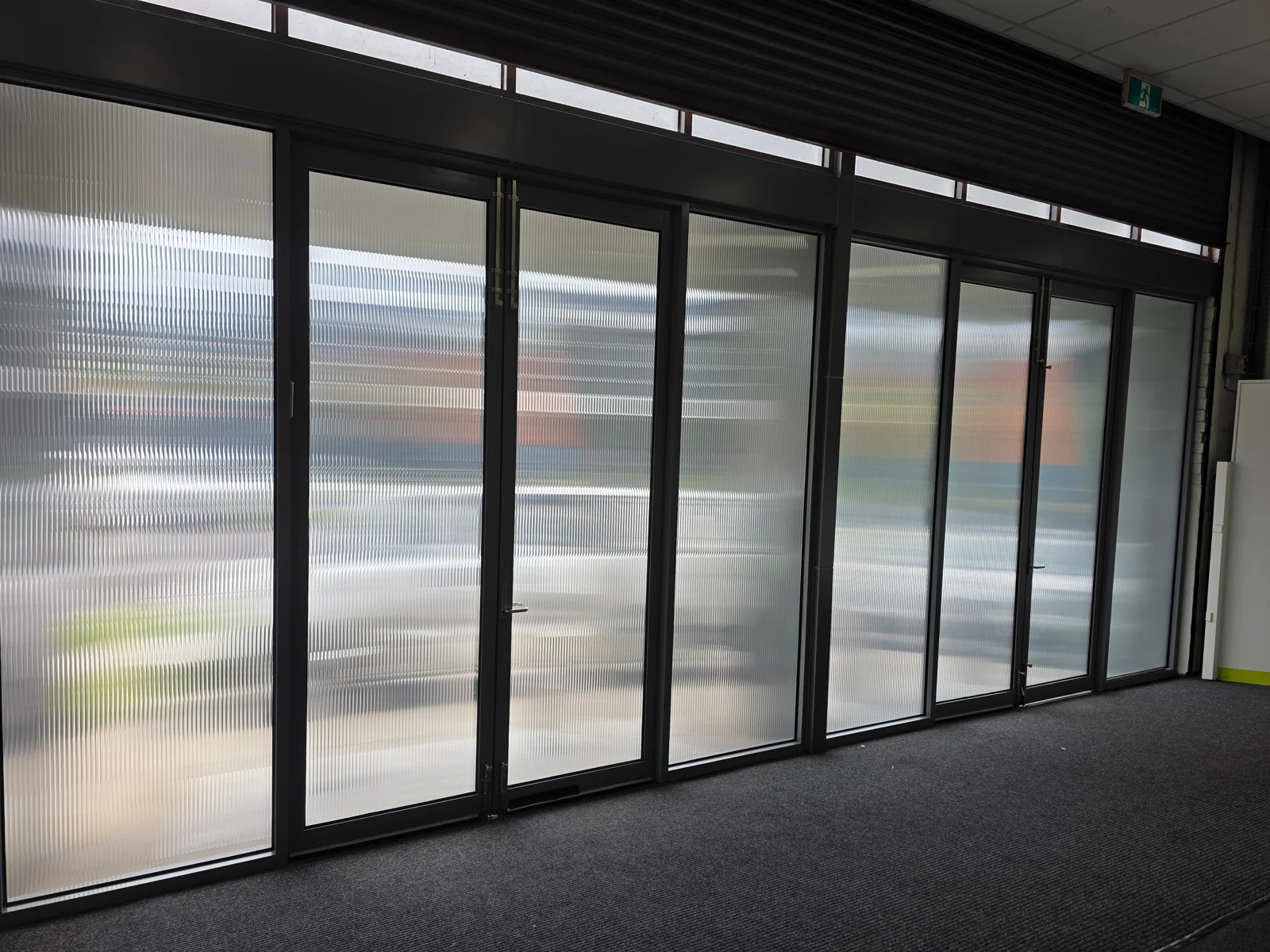
Project example: 15 mm reeded film at Ark Centre
At Ark Centre in Hawthorn East, we installed decorative film with a 15 mm reeded pattern across nine panes in the reception and side entrance. The reception photograph shows how the vertical pattern breaks up views through the glazing while allowing daylight through, creating a fluted-glass appearance across the existing windows and doors. This project is a real example of a wider alternative to the usual 13 mm pattern.
What is frosted window film?
Frosted film gives existing glass a translucent finish that softens the view through it. Different products offer different appearances and levels of obscurity, from lighter decorative finishes to denser frost. It can cover a whole pane or be cut into bands and patterns. That makes it useful where only part of a window needs screening, such as the seated eye level of a meeting room. Our window frosting service covers product selection and installation for homes and workplaces.
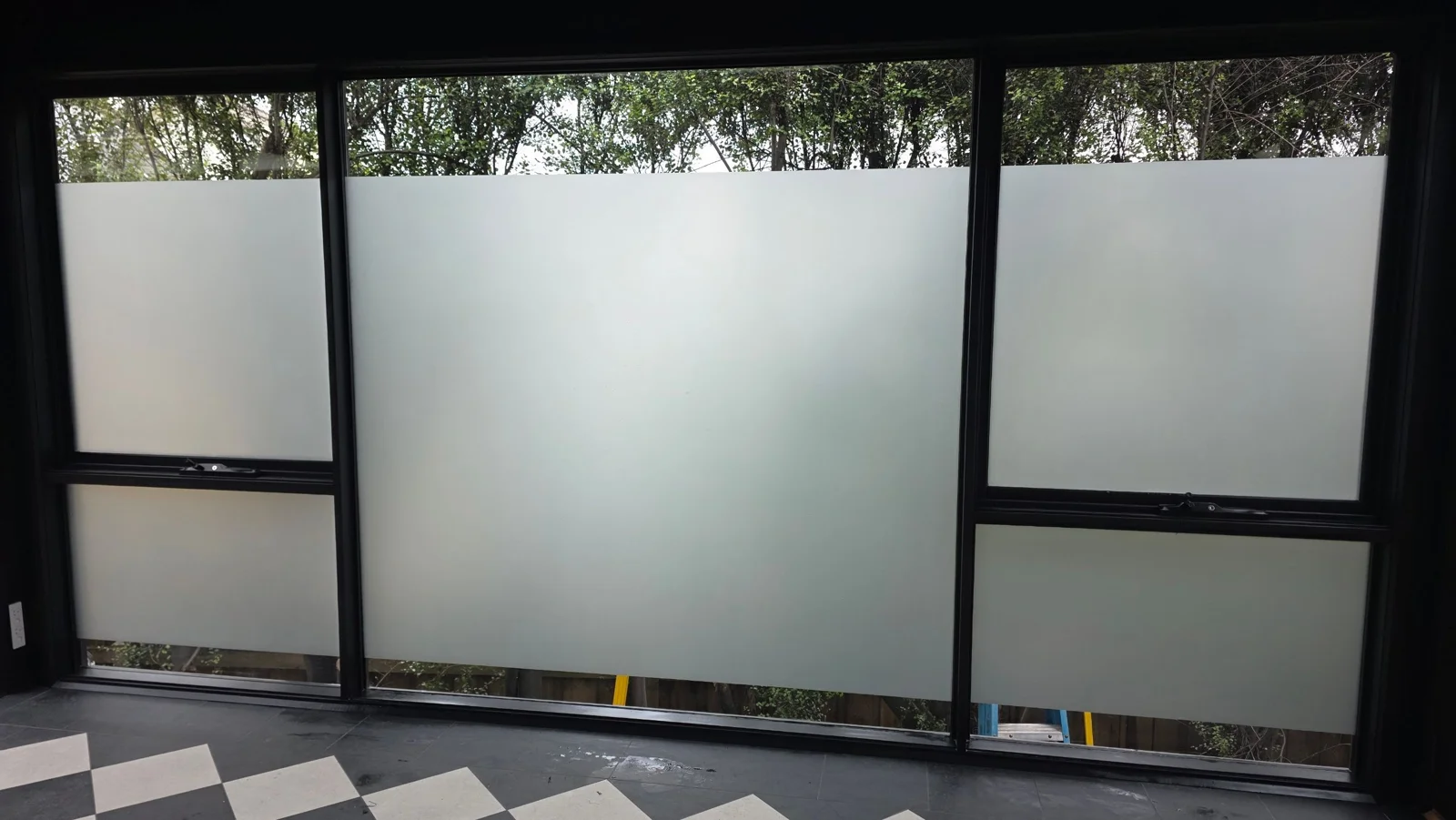
Opal Haze frosting for Warrington Homes
For a Warrington Homes project, we installed Opal Haze frosted film across five panes. The completed photograph shows a broad frosted area with clear strips above and below. It provides a useful contrast with reeded film: a more uniform translucent finish, with the coverage selected for the window layout.
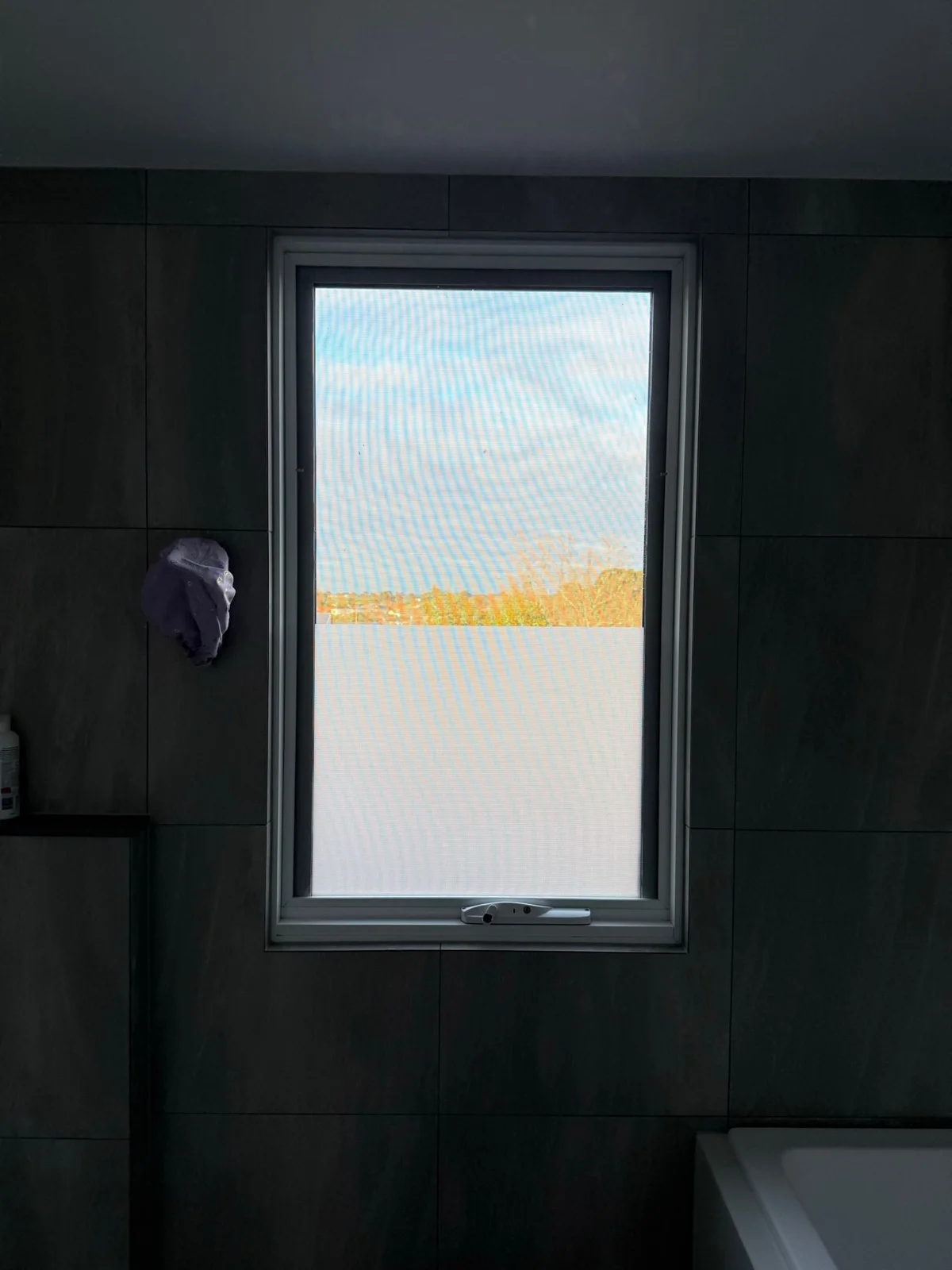
Partial bathroom frosting in Glen Iris
At a Glen Iris home, we installed Opal Haze film to part of two bathroom windows. The photograph shows the lower section frosted while the upper section remains clear. This demonstrates how frosting can be positioned around the required sightline without covering the entire pane.
Which gives better privacy?
If privacy is the main reason for installing film, start by comparing denser frosted finishes with a sample of the reeded product you like. Clear reeded film distorts the view, but that does not mean people, objects or movement will disappear. Frosted film also varies: silhouettes can remain visible, especially when someone is close to the glass or strongly lit from behind. Consider viewing distance, the position of people inside, lighting on both sides and how much of the pane needs covering.
What happens at night?
Reeded and frosted films work by changing the view through the glazing rather than relying on the reflective effect associated with daytime privacy film. However, their appearance and the visibility of silhouettes still change with lighting. Check the proposed finish with the room lights on after dark, particularly where the window faces a street, neighbouring property or shared corridor.
Which lets in more natural light?
There is no reliable answer based on the words “reeded” and “frosted” alone. Light transmission depends on the individual film, its finish and the existing glazing. A clear-looking reeded film and a dense frost may feel quite different, but compare the actual products rather than assuming one category always lets in more light.
Which finish suits your space?
Internal doors and decorative glazing
Reeded film is worth considering when the fluted pattern is part of the design. Choose the reed width and finish to suit the scale of the glass and surrounding interior.
Offices and reception areas
Both options can work. Reeded film adds a decorative pattern; frosting can provide a more uniform screen or a band positioned around desks and meeting areas. Our office window tinting guide covers the wider options for workplace glazing.
Bathrooms and residential windows
Start with the privacy requirement, then assess suitable products and installation conditions. Wet areas, steam and exposed film edges need consideration, and installation position and warranty suitability should be assessed for the specific product and window. Our bathroom window frosting and privacy guide explains the options for these spaces.
Entrances and branding
Frosted film can also form part of a design incorporating logos, lettering or decorative cut-outs. For business branding, explore our window signage and graphics options.
Can you use bands or combine finishes?
Full coverage is only one option. A frosted band can screen a particular part of a window, while a decorative pattern can become a feature across the pane. Frosted reeded products also bring the two looks together. Plan the height and coverage around actual sightlines. A design that looks attractive in a sample may leave gaps in privacy when viewed from a different height or angle.
What affects the cost?
Pricing depends on the chosen film, the dimensions and number of panes, access, preparation, removal of existing film and any custom cutting or graphics. Compare quotes for the same scope rather than assuming that every reeded or frosted product has the same installed price. Our window tinting pricing guide provides broader cost information.
How to choose
- Decide how much visual privacy you need.
- Compare actual clear reeded, frosted reeded or conventional frost samples.
- Look at the samples under daytime and evening lighting.
- Choose the pattern width and coverage to suit your glazing.
- Have the glass, installation conditions and product suitability assessed.
For a decorative fluted-glass appearance, reeded film is a useful option. For stronger visual screening, a denser frosted finish is often the better starting point. We can help you compare finishes for your Melbourne home or workplace. Contact us to compare samples and request a quote, or explore our window frosting service.
Related services
Topics in this article